

Customer Callback and SMS Workflow
November 14, 2018
Case Studies
Case Study
Customer Service
A customer callback process called “While You Were Away” solved a practical service problem: recording missed calls, assigning follow-up, and informing the customer when a callback attempt was unsuccessful.

The Original Process
When the intended employee missed a call, reception recorded the customer's number and message on a sticky note and placed it on a shared board. Employees checked the board after returning to the office.
The method created three problems:
- employees could not receive the message while traveling or working away from the office;
- managers could not reliably measure whether or when a callback occurred;
- unsuccessful attempts depended on the employee's follow-up, and the customer received no SMS confirmation.
The AMODIT Workflow
Reception now creates a form with the message, callback number, and responsible employee.
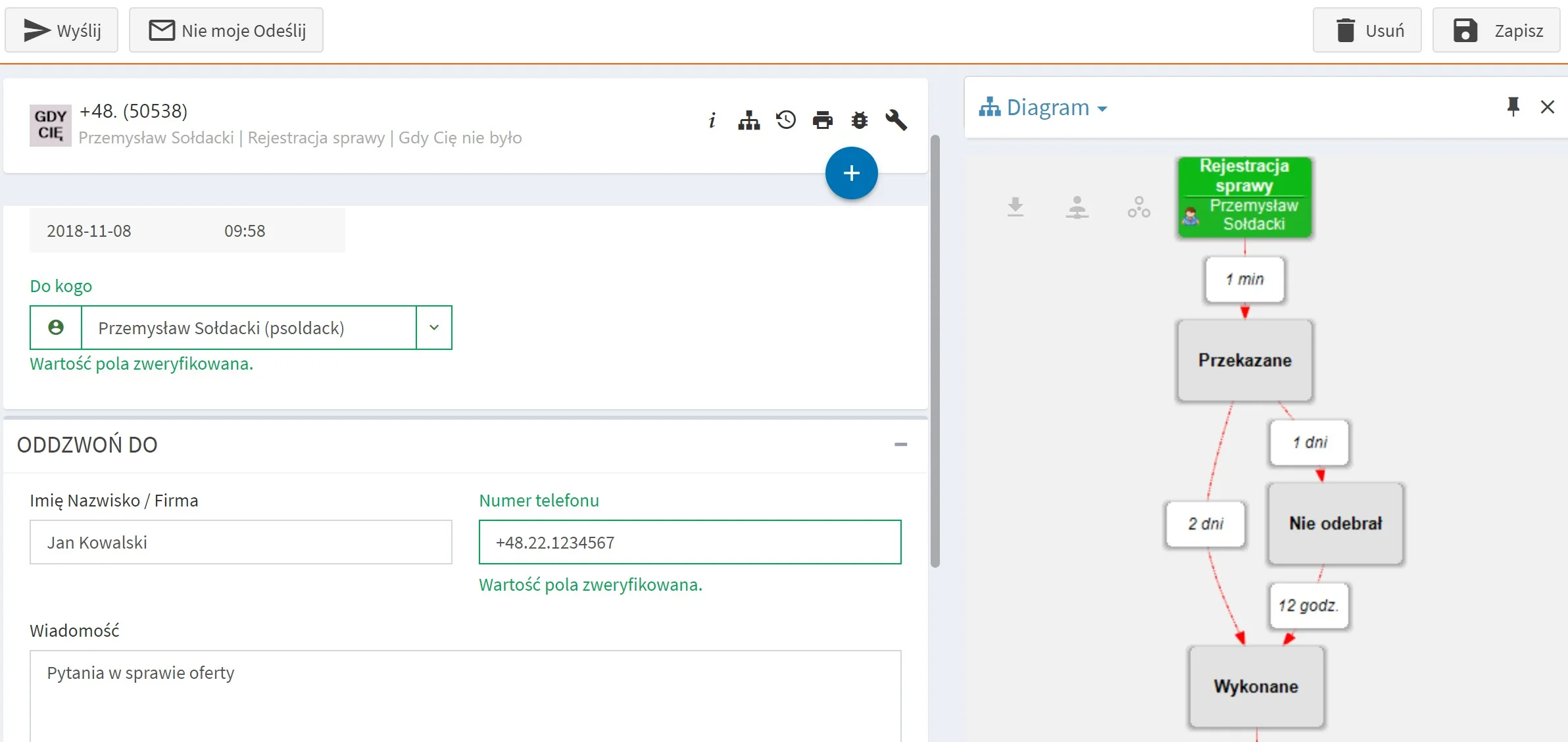
AMODIT assigns the case and sends an email notification, allowing the employee to respond before returning to the office. The workflow records both the request time and callback time. Managers can report response time by employee, month, and other criteria.
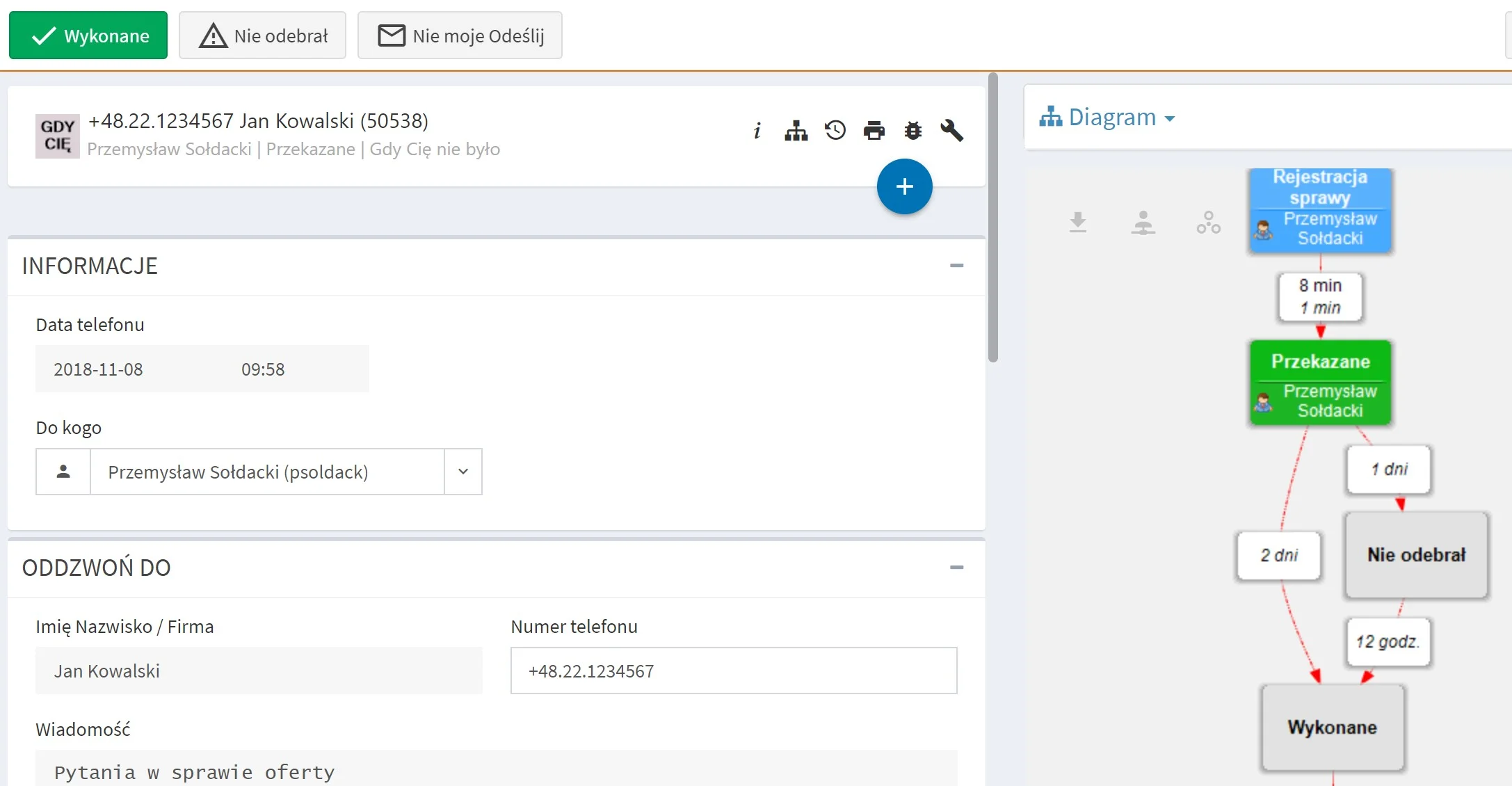
If the employee records that the customer did not answer, the system sends an SMS stating that a callback was attempted. The customer has confirmation and can call again at a convenient time.
Result
The workflow makes callback requests available remotely, creates measurable response records, and gives customers a consistent notification after an unsuccessful attempt.