
Cloud Data Security for SaaS
January 2, 2026
Business Tips
Cloud Security
SaaS
Moving contracts, employee records, invoices and trade secrets to a SaaS platform requires evidence that the provider can protect them. The right review covers infrastructure, legal obligations, identity, encryption, backups, auditability and an exit plan.
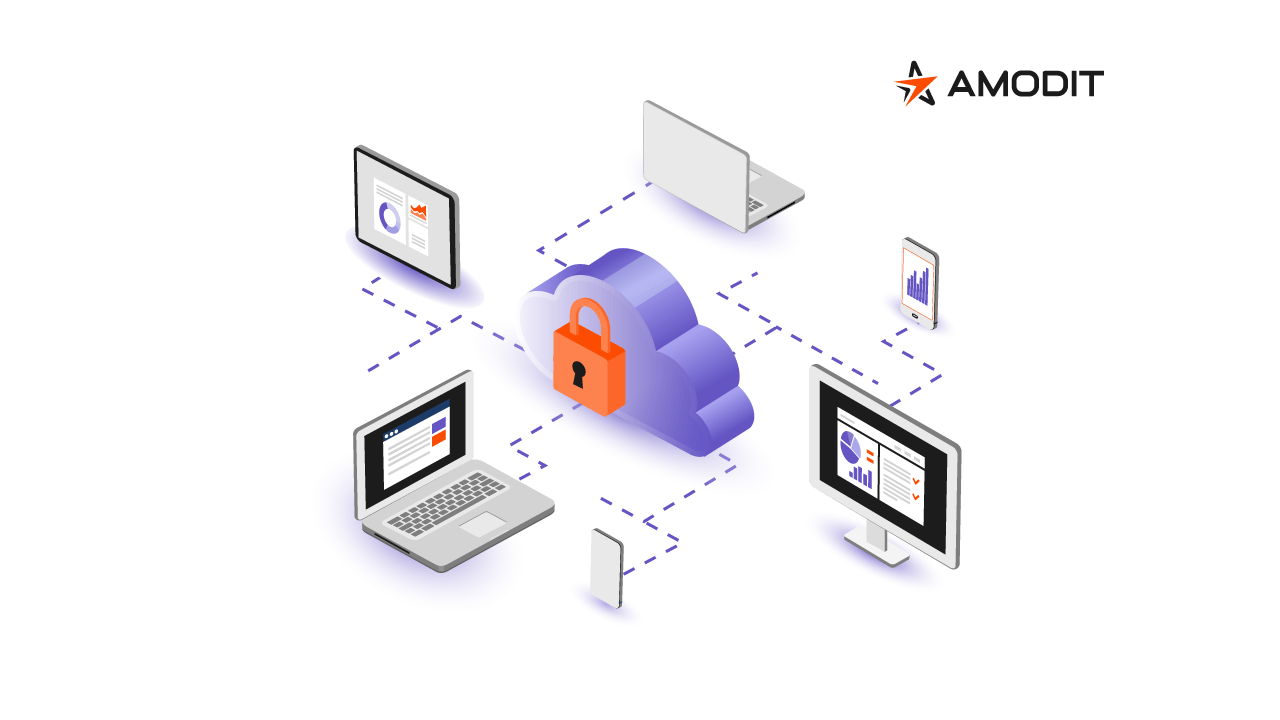
Threats are global, automated and increasingly supported by AI. A professional cloud environment can provide safeguards that are difficult to maintain in a local server room, but providers differ in architecture, controls and operating discipline.
Cloud Infrastructure Versus a Local Server
The source article presents professional cloud infrastructure as the stronger option in most cases. It contrasts around-the-clock monitoring, fire protection, specialist security teams and redundancy with the constraints of many local server rooms.
AMODIT uses Microsoft Azure infrastructure. Data replication and physical data-center safeguards reduce dependence on a single drive or server.
Legal and Regulatory Requirements
Security also includes contractual and legal controls. The source identifies three review areas:
- ISO 27001: evidence of an information security management system. The source states that Astrafox, AMODIT's developer, holds this certification for its software development and implementation scope.
- Data residency: confirmation that data remains in the European Economic Area when required under GDPR, using European Azure regions.
- Financial-sector requirements: alignment with the Polish Financial Supervision Authority cloud guidance when it applies to the customer.
Technical Protection Against Unauthorized Access
A password alone is not enough. The source recommends a layered control model:
- Encryption: protect data at rest and in transit with standards such as TLS 1.2/1.3 and AES-256.
- Multi-factor authentication: integrate with a corporate identity provider such as Microsoft Entra ID for centralized access control.
- Penetration testing: verify that independent specialists test the platform regularly.
Provider Stability and Exit Planning
Business continuity matters as much as technical security. Review the provider's market history and financial stability. The agreement should define how all documents and metadata can be exported in an open format after the relationship ends, reducing vendor lock-in.
2026 SaaS Security Checklist
- Does the provider hold ISO 27001 certification?
- Where are customer-data servers physically located?
- How often are backups created and restoration-tested?
- Is data encrypted at rest and in transit?
- Does the platform support SSO and MFA?
- Can the customer access a full audit trail?
- Does the agreement define SLA terms and data-return procedures?
Enterprise SaaS and Basic Services
| Area | AMODIT Enterprise | Basic SaaS |
|---|---|---|
| Infrastructure | Microsoft Azure | Local server room or low-cost VPS |
| Certification | ISO 27001 | Often none |
| Backups | Geographic redundancy | Often only a local copy |
| Authentication | AD/SSO integration and MFA | Login and password |
| Encryption | Database, files and transmission | Often transmission only |
| Auditability | Detailed action and change records | Limited activity history |
SaaS Document Workflow Security FAQ
1How does professional cloud infrastructure address ransomware?
Layered access controls make unauthorized access harder, while regular isolated backups support restoration to a point before an attack. The complete result depends on provider configuration and customer operating procedures.
2Who can access documents stored in the cloud?
Access is limited to users authorized by the customer. The source states that AMODIT service personnel access document content only after explicit, temporary approval for support and that such access is recorded.
3Does AMODIT address Polish financial-sector cloud requirements?
The source states that AMODIT architecture and organizational procedures were prepared with the Polish Financial Supervision Authority cloud guidance in mind and that the platform is used by financial institutions.
4What SLA is described for enterprise systems?
The source describes 99.5% or higher availability as the enterprise standard and states that this level is available in the AMODIT offering. The applicable agreement defines the binding service level.