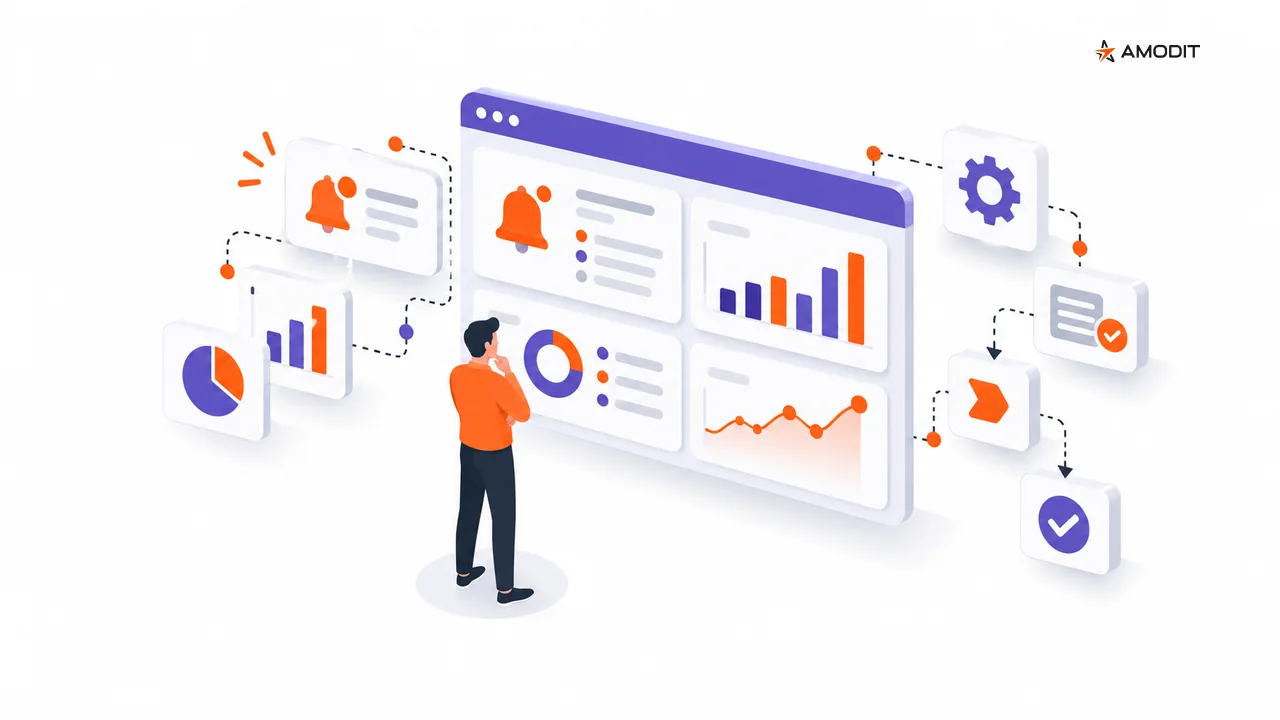
Digital Employee Onboarding
July 6, 2026
HR
HR
Employee Onboarding
A new employee may arrive full of energy while HR is still closing formalities, equipment is not ready, system accounts remain inactive, the manager learns about the start that morning, and IT receives a late request. Documents and tasks move between teams by email and phone.
The issue is usually not commitment. It is a process that depends on manual coordination across many people. Onboarding is therefore a strong starting point for HR digitization: it is repeatable, spans several departments and makes workflow improvements visible from an employee's first contact with the organization.
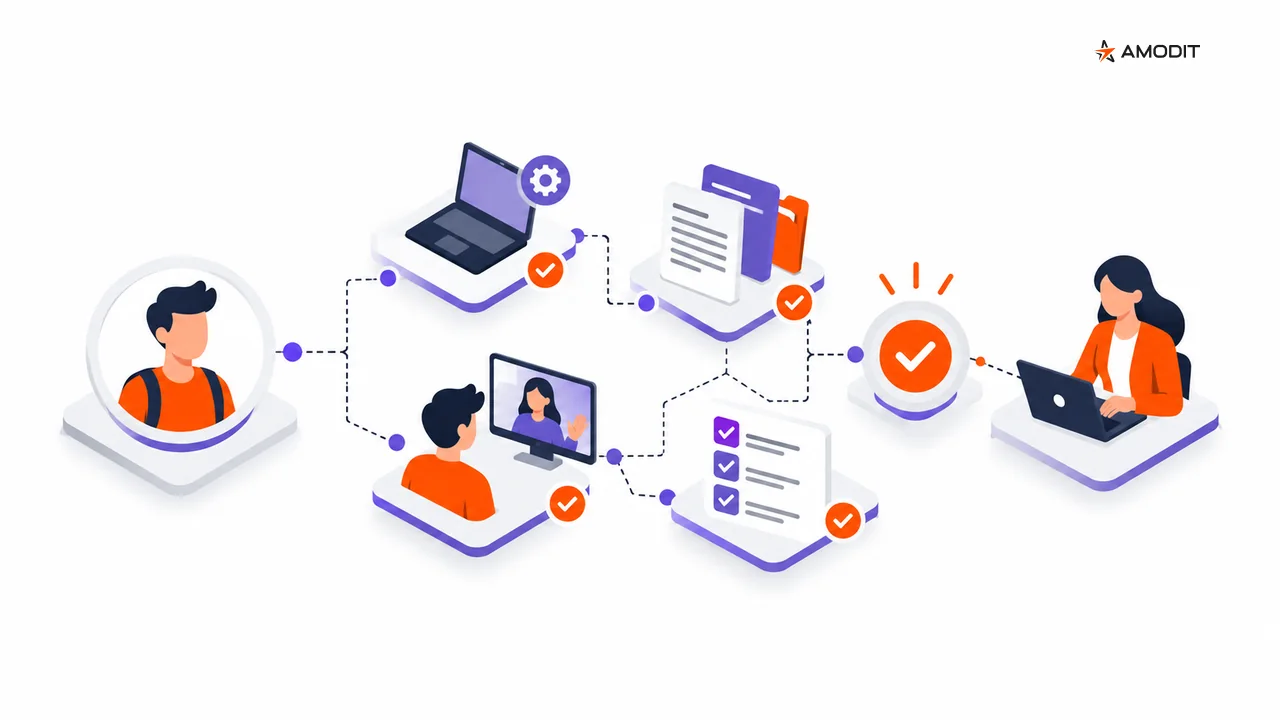
Onboarding as a starting point for digitization
Onboarding is not solely an HR responsibility. Managers, IT, Administration and often Finance or Security also take part.
Every participant has tasks, deadlines and responsibilities. A delay in one task pushes back subsequent stages.
Digitization addresses common process problems:
- no shared task checklist;
- manual handoffs between departments;
- no automated notifications;
- documents prepared manually;
- lost email messages;
- limited process-progress visibility.
A structured workflow makes onboarding predictable and shows every participant what to do and when.
Problems solved by digital onboarding
1. Better cross-functional communication
Tasks run in one process instead of separate emails and calls. The system assigns responsibility to the right people and sends deadline reminders.
2. Automated document preparation
Agreements, forms, declarations and confidentiality clauses can be generated from employee data, reducing manual work and the risk of errors.
3. More effective coordination with IT
IT receives complete information about equipment, user accounts and licenses at the right time.
4. Greater visibility for the manager
The manager sees onboarding progress, completed tasks and items that still require action.
5. More time for HR
Instead of coordinating messages and chasing tasks, HR specialists can focus on the new employee's experience.
The cost of delayed onboarding
Every day of delay creates an organizational cost. A new employee without access to required systems or equipment cannot work fully, while managers, HR and IT spend time resolving the issue.
Across a larger number of hires, even small delays can create significant coordination costs and affect project delivery. Organizations therefore treat onboarding improvement as an investment with visible operational effects.
Digital onboarding in AMODIT
AMODIT runs onboarding as a defined process:
- HR enters the new employee's data or imports it from the HR system.
- The system prepares the required documents automatically.
- Tasks go to IT, Administration and the manager.
- Each participant sees task status and deadlines.
- The new employee receives a consistent onboarding plan.
- HR sees the complete process and can respond to delays.
Four workstreams before day one
In the workflow described here, onboarding cases open once the employment terms are approved — before the candidate attends the medical examination and before the employment contract is signed. AMODIT creates four linked cases and assigns them to the new hire’s manager:
- Access card request — with the employee’s name and details of their manager and HR owner.
- IT equipment request — based on the organizational unit, role and manager.
- System access request — based on the role and organizational unit.
- Initial occupational health and safety training — with the employee’s email address, phone number, employee record number and organizational unit city.
Each case has the employee’s first day as its target date. Progress is visible in the employment case, and cancelling the hire also closes the linked onboarding cases.
How contract signature affects onboarding
The four onboarding workstreams do not wait for a signed contract. Contract signature remains a separately controlled stage of the hiring process. If the contract is still unsigned on the scheduled start date, the recruiter and manager are notified. HR and the recruiter then agree a new date and resend the signature package or close the case.
Two health and safety checkpoints
Occupational health and safety is involved at two points. Before the medical examination, the OHS coordinator assigned through the organizational unit verifies the authorisations required for the role and signs the referral. Before the employee starts work, AMODIT creates an initial OHS training case for the manager with the data needed to arrange the task.
The training covers general and job-specific induction. The records for both are signed electronically and the signed documents are transferred to the employee’s electronic personnel file.
Many organizations start with onboarding and then extend digitization to leave requests, business trips, performance reviews and offboarding.
Why organizations start with onboarding
Onboarding is relatively straightforward to organize and automate. It is repeatable, connects many teams and directly affects the new employee's experience. The operational changes are visible to HR and the wider organization.
For an organization selecting the first HR process to digitize, onboarding is often the natural first step.
HR digitization does not require an organization-wide transformation at once. One process can establish the foundation for further automation.
A consultation with AMODIT specialists can show how a digital onboarding process works and how it can be adapted to current responsibilities and systems.
Article by:

Service Delivery Director
He turns fragmented processes into working systems that deliver measurable business outcomes. He has coordinated implementations for LPP S.A., GI Group, Holcim, Rossmann and Rhenus Logistics. His starting point is a detailed analysis of the organization: how to improve workflow, optimize resources and select the process that will deliver the fastest result. His projects change daily work in ways measured through time, cost and team efficiency.