Essential BPM Platform Capabilities
July 24, 2024
Business Tips
Business Tips
BPM
A business process management platform connects process design with execution, monitoring, and continuous improvement. The right capability set helps teams remove bottlenecks, coordinate work, and adapt operations as requirements change.
Why BPM Capabilities Matter
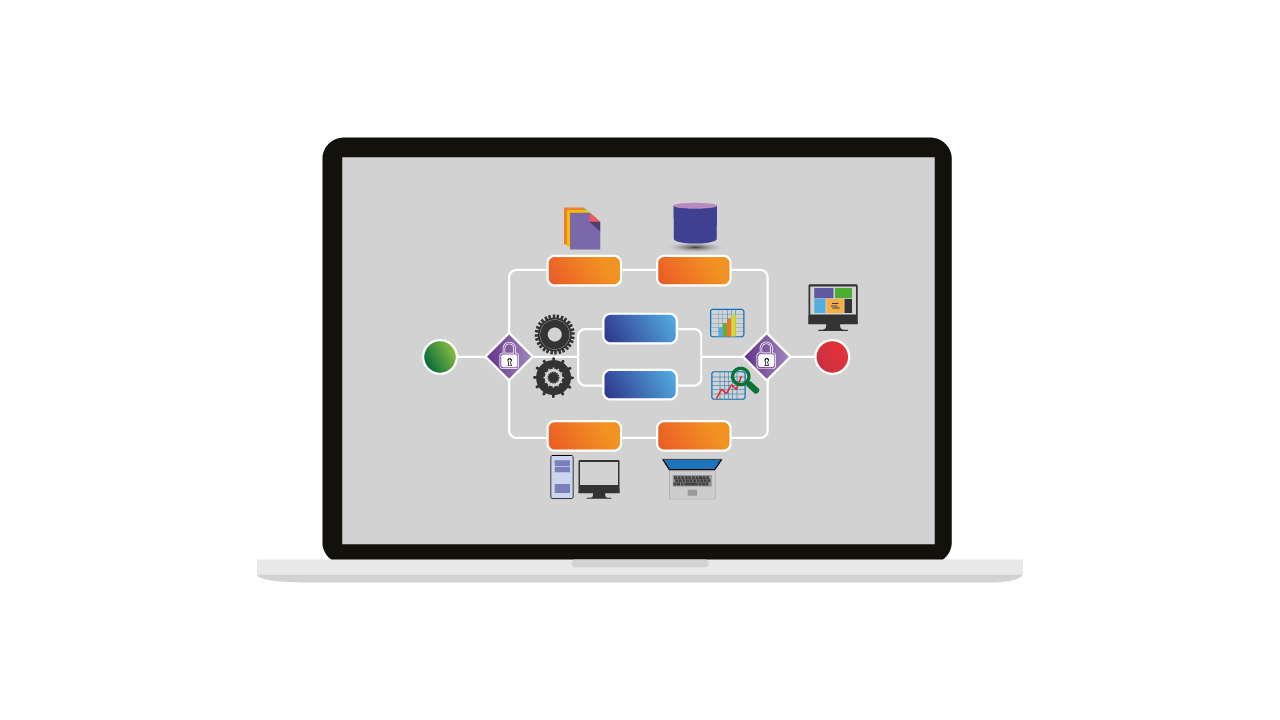
Business process management covers the design, modeling, execution, monitoring, and improvement of repeatable work. A platform brings these activities together so organizations can identify bottlenecks, reduce avoidable operating effort, and respond to changing conditions.
Automation accelerates routine tasks and reduces manual errors. Resource and workload visibility helps managers coordinate people, systems, and budgets around the process rather than isolated departmental activities.
Process Modeling and Automation
Visual modeling makes a process easier to analyze, explain, and improve. The platform should translate the model into executable routes, rules, forms, tasks, and integrations.
Connections with ERP, CRM, and other business applications support consistent data flow across departments and reduce repeated data entry.
Monitoring, Analytics, and Optimization
Real-time monitoring shows how active work is progressing and where delays occur. Dashboards and analytical reports help managers compare process performance, investigate bottlenecks, and make informed changes.
Continuous improvement depends on a repeatable cycle: monitor the process, analyze the evidence, change the design, and review the result.
Document and Task Management
Document workflow, archiving, search, and version control keep the current record and its history together. Task management assigns work, records ownership, and shows progress so teams can coordinate across process stages.
Managers should be able to see who owns each activity, its due date, and its current status without relying on separate email threads or spreadsheets.
Security, Compliance, and Scale
Role-based access controls define who can view data and perform actions. Audit histories, reporting, and monitoring support internal controls and relevant compliance requirements.
The platform should scale across additional users, processes, data volumes, and integrations. Extensibility is more important than a long list of modules that cannot be adjusted as work changes.
AMODIT as a BPM Platform
AMODIT combines visual process configuration, workflow automation, integrations, real-time monitoring, document management, task management, and access controls. Its low-code approach allows trained users to model and adjust processes without conventional software development for every change.
The platform can support a controlled improvement cycle from process design through execution and reporting.