

A File Repository Outside the Case Workflow
November 4, 2026
Features
Policies, instructions and shared materials do not always belong to a workflow case. AMODIT provides an organized repository for these files within the same platform teams use for process work.
Content is arranged in workspaces and folders. Permissions and inheritance shape access, while a space administrator provides a defined management role for that area.
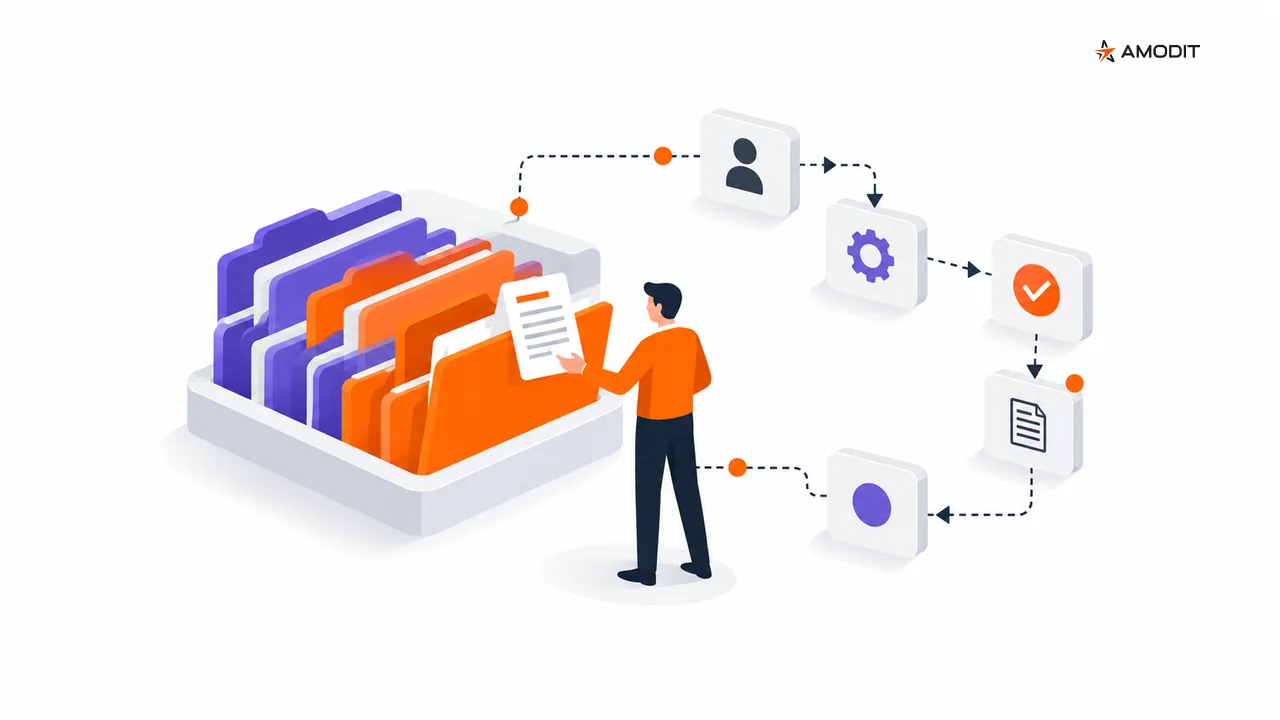
Files that sit outside a case or process
The repository is designed for documents with no case context. This is the defining difference from an attachment added while a workflow is being handled: the attachment belongs to a specific case, while a repository file can remain available outside that workflow.
Policies, instructions and guidelines are practical examples. Teams can keep these shared materials in AMODIT without opening a separate case for every document.
Workspaces, folders and resources organize content
Files are stored in workspaces and folders. The product materials also identify resources as part of the repository organization and its access model.
The confirmed description lists workspaces, folders and resources but does not define a complete hierarchy between every element. The article therefore does not assume one mandatory structure for every environment.
A space administrator manages a defined area
The repository includes a space administrator as a distinct part of its management model.
The available materials do not provide a complete list of space administrator operations or define how responsibilities are divided between this role and the system administrator. That scope needs to be established for the configured environment.
Permissions and inheritance shape access
Permissions and inheritance are elements of the access model for workspaces and resources. The confirmed material establishes their presence without describing the detailed configuration method.
The confirmed scope does not specify inheritance direction, exceptions, rule precedence or a detailed role matrix. These points need to be checked when a particular workspace and access model are designed.
Preview and search support day-to-day use
The repository supports file preview without downloading and search within the structure. Users can locate a relevant item and inspect it without leaving AMODIT.
The source material does not list supported formats or define the search and preview behavior for every file type. The public description therefore stays at the confirmed product level.
When does the repository fit the need?
The repository is relevant when:
- a document needs to remain available outside an individual case or process,
- the material is a policy, instruction or guideline,
- content needs an organized workspace and folder structure,
- access needs to follow permissions and inheritance,
- users need file preview and search within AMODIT.
This is a separate scenario from handling attachments in a workflow. The repository provides a location for files outside cases, while a case remains the context for a specific process instance.
What the confirmed scope does not establish
The confirmed repository description does not define:
- its technical relationship with a RAG Knowledge Base or an AI agent knowledge base,
- file versioning, retention or operation audit rules,
- file size, count or format limits,
- detailed exceptions to permission inheritance,
- availability across individual AMODIT editions or licenses.
For that reason, the repository is described here as a standalone capability for organizing and sharing files outside cases. It is not presented as a RAG Knowledge Base or as an automatic source for agent knowledge.
This article does not describe any AI scenario involving the repository. Independently of that, AMODIT AI use cases follow a clear rule: AI recommends and a person approves.
Explore the wider AMODIT document management system and the AMODIT BPM platform.
Frequently asked questions
How is the repository different from case attachments?
An attachment is associated with a specific case and its workflow. The repository stores files that do not belong to any case or process.
How are files organized?
Files are held in workspaces and folders. The materials also identify resources as part of the structure and access model, but they do not define a complete hierarchy for every resource type.
Who manages the repository?
The model includes a space administrator. The confirmed description does not provide a complete operation catalogue or a precise division of duties with the system administrator.
How do permissions work?
Access is built through permissions and inheritance within the structure. Detailed inheritance rules, exceptions and precedence are not defined in the confirmed material.
Is the repository an AI RAG Knowledge Base?
The confirmed scope does not explain the technical relationship between the repository, a RAG Knowledge Base and an agent knowledge base. These mechanisms should not be treated as identical without separate confirmation.