Free PDF e-book
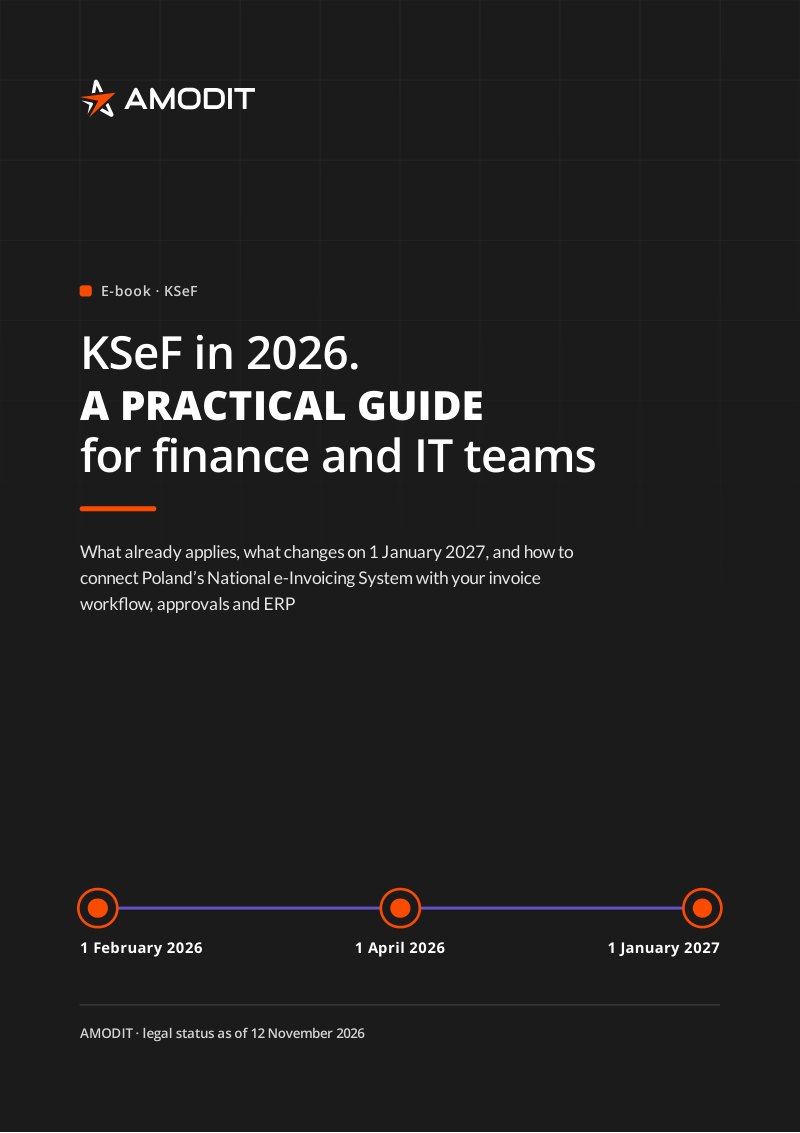
E-book KSeF in 2026. A practical guide for finance and IT teams
What already applies, what changes on 1 January 2027, and how to connect KSeF — Poland’s National e-Invoicing System — with your invoice workflow, approvals and ERP. Legal position and Ministry of Finance announcements as of 12 November 2026.
What’s inside
- A clear KSeF timeline What has applied since 1 February and 1 April 2026, what ends on 31 December 2026 and what changes on 1 January 2027 — including where the penalty rules stand.
- Exceptions, FA(3) and offline modes Who is outside the mandate, how invoice attachments work, and how Offline24, unavailability and emergency mode work, with deadlines for sending invoices to KSeF afterwards.
- Certificates, tokens and permissions Type 1 and type 2 certificates, the future of tokens, the ZAW-FA notification and permission management across several legal entities.
- What changes for finance and IT Purchase invoice intake, approvals, the KSeF number in payment titles from 1 January 2027, archiving and preparing for system outages.
- A readiness checklist 15 steps for the end of 2026 — from checking the scope of the obligation in each entity to testing offline modes and correction rules.
- KSeF connected to your process How KSeF Connector and AMODIT invoice workflow link KSeF with your ERP, approvals and payments, followed by answers to 10 common questions.
Who this guide is for
CFOs, finance directors and chief accountants
Responsible for timely posting, payments and cost control in companies operating in Poland.
IT managers and ERP system owners
Maintaining the KSeF integration, permissions and fallback modes.
Shared services and document workflow owners
In organisations with multiple legal entities, branches or approval paths — including Polish subsidiaries of international groups.
This guide is not tax advice. Official sources are listed at the end of the e-book; most are available in Polish only.