

Sensitive Data Protection
October 6, 2022
Features
Security
Encryption
Business workflows can contain employee records, compensation data and contract values. AMODIT sensitive-data protection adds encryption and access controls for information that requires stricter safeguards.

Protection From Application and Database Administrators
Standard AMODIT permissions control access between business users. The sensitive-data module also addresses privileged roles that would otherwise have broad access, including application and database administrators.
Separate Encryption Keys
Organizations can define multiple keys for different business areas. One key can protect HR information and another financial data, each with a different authorized user group.
A designated business administrator decides who can use each key. For example, the HR director can control access to the key protecting personnel data.
Process designers assign encryption to selected text fields, such as a national identification number or compensation amount, and to fields storing files.
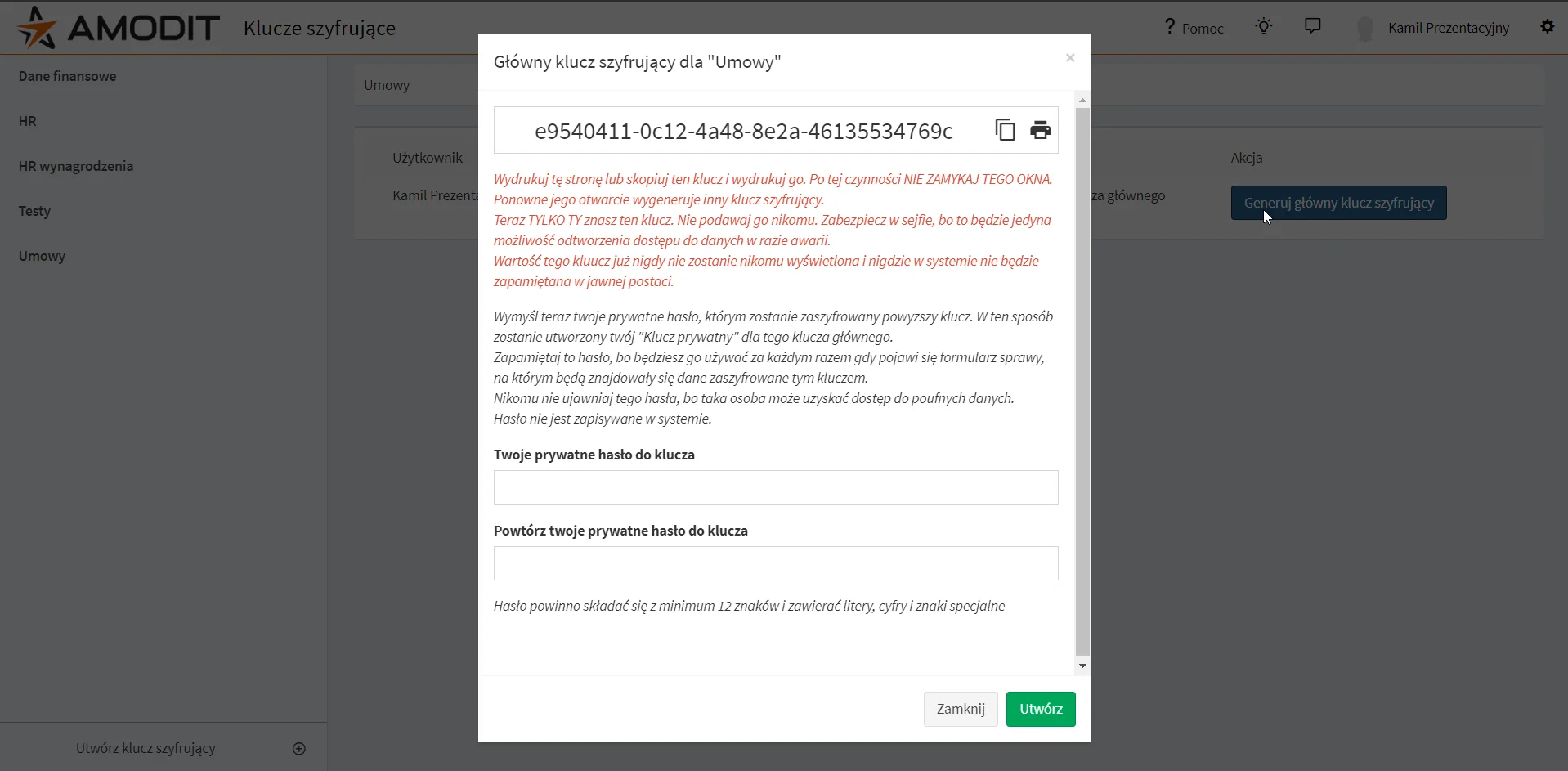
Individual Password Access
Each authorized user creates an individual password. When opening a case that contains protected information, the user enters that password to decrypt the data.
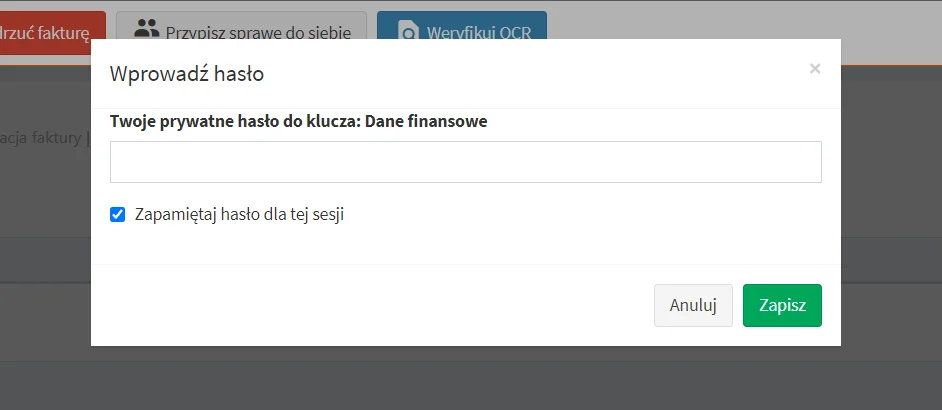
Without the password, the user sees only fields that are not encrypted. The password can be remembered for the current session so it does not need to be entered for every case.
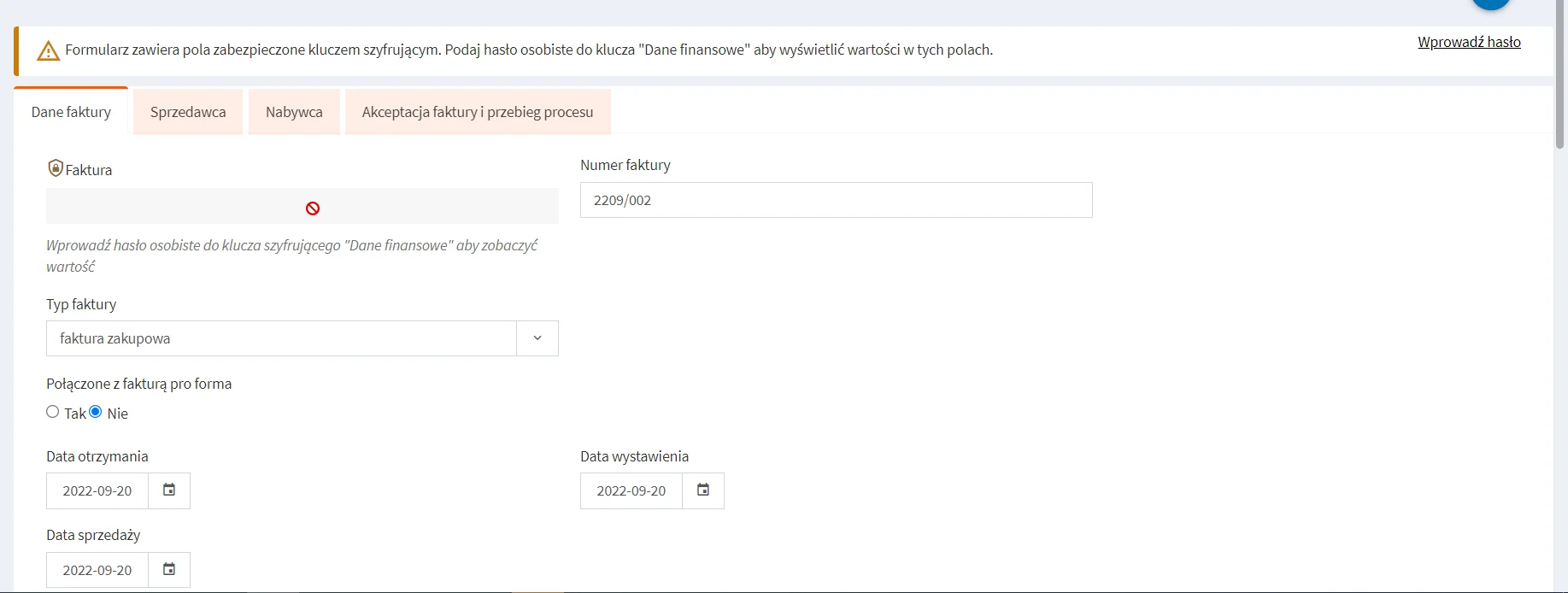
Encrypted Storage
Protected values remain encrypted in the database and files remain encrypted on the server. Reading them requires access to the appropriate key.
The module is intended for processes where access to confidential data must remain limited even for application or infrastructure administrators.