

Document Workflows for Process Management
June 11, 2014
Features
Features
Document Workflow
Document workflow software delivers value when it improves the process around the record: routing information, monitoring progress and supporting measurable operating results. Technology alone is insufficient when old habits and unclear responsibilities remain unchanged.

Many organizations already own servers and software but use only a small part of their potential. The examples below show how workflow and document management capabilities can improve familiar business processes.
Old Habits Block Change
Even large organizations with advanced IT environments still handle important work through email, spreadsheets and large volumes of paper.
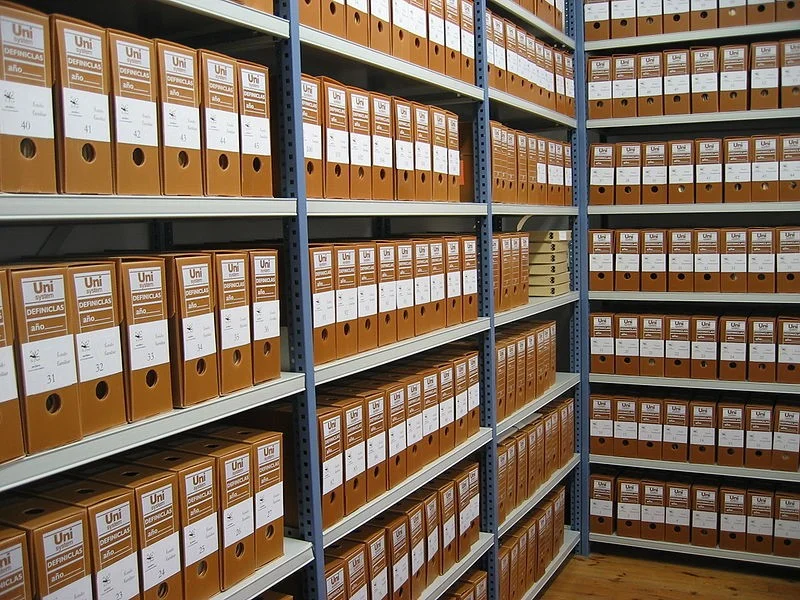
Paper archiving is expensive. When several employees need access to customer agreements at different stages of a relationship, searching cabinets and folders becomes a time-consuming part of daily work.
Employees can also approach new tools cautiously because they need to learn a different interface and change established habits. Teams that are comfortable recording information in Excel can perceive another platform as additional work even when the spreadsheet has clear limitations.
Leave requests, employee advances and business travel settlements are still often printed, completed manually and delivered to an approver's desk.
Consider a fictional international financial organization called Abdera Finance. It introduced a modern intranet platform to replace unstructured network folders and reduce time spent finding information. The investment failed because the implementation team did not spend enough time showing managers and employees how the platform would improve their work.
The objective is not simply to replace paper with a computer file. Information must reach the right people at the right time and in the context of a specific task.
Leave Request Workflow
Even a simple leave approval process creates a coverage problem. Deciding who can take leave around a long weekend or holiday can become difficult in a small team.
Abdera Finance records proposed leave in a shared spreadsheet calendar on a network drive. The file does not show clearly who changed it or when, creating disputes about priority. The problem becomes more visible near year-end holidays when part of the team must remain available.
Without the shared spreadsheet, a manager would need to maintain paper forms or email requests and organize them by week. Each approach becomes inefficient in a large structure.
Paper forms can also be ambiguous. An employee marked 3 days of leave between January 10 and 14. The office assistant told the payroll provider that the employee would take 5 days, without knowing that January 11 and 12 were business travel days. The employee, manager and assistant all spent time correcting the misunderstanding.
Electronic leave requests replace this ambiguity with a transparent process. AMODIT provides the manager with one controlled approval workflow and a clear record of each decision.
Purchase Invoices
The Warsaw branch of Abdera Finance incurs recurring administrative costs for phones, correspondence, secure document disposal, office supplies and equipment. It also receives invoices from agents, intermediaries and brokers working in regions where the company has no local office.
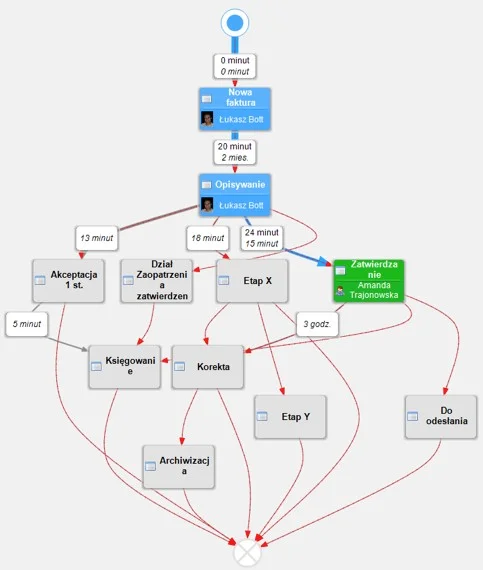
For administrative costs, the office assistant collects employee requests by email, checks inventory, places orders, codes invoices and sends them to the branch director and accounting. Agent invoices first go to operations for substantive approval, then to the branch director and chief accountant for payment authorization.
An invoice that does not match an established pattern, such as a legal opinion for the branch, requires an exception path. The assistant must ask a manager what to do, and the organization still needs to record the final action even when the document is returned to the sender.
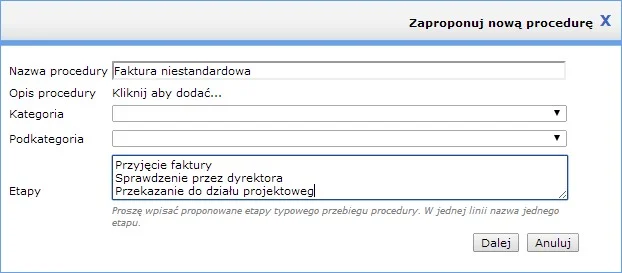
Some document workflow platforms make every change dependent on IT. AMODIT supports a simpler approach. A business user can start a new procedure for an exceptional case without defining every future stage. The employee forwards the invoice to the next responsible person, and each routing decision helps establish the practical process.
Established procedures also change. Purchase orders can be linked to employee requests, giving managers better control over who requests supplies and how often. Limits and budget exceptions can be recorded and analyzed. A new approval step can require each purchase invoice to reference a specific requisition.
Supplier Verification and Approval
Organizations need to assess customers and partners carefully when longer payment terms threaten cash flow. A sales team can focus on acquiring business without knowing that a new customer has previously missed payments.
Finance, collections and external collection partners may hold information that never reaches sales. Salespeople, in turn, know where and how they contacted the customer and what arrangements were made. When these teams do not exchange data, the organization loses a complete view of risk. Some businesses have lost millions of Polish zlotys through this disconnect.
A new CRM and BI/ERP environment does not solve the problem when it preserves poor practices. Linking sales commission to paid rather than issued invoices could encourage better risk checks, but rigid systems can make such changes slow and expensive. A supplier or customer verification workflow and flexible database integrations connect the missing information.
Customer Complaints
The fictional Abdera Finance branch employs 14 people, including only 6 in direct operations. It serves slightly more than 100 active customers, while the largest 15 generate most of the revenue.
The branch receives an average of 8 complaints each month, mainly from its largest and most active customers. A delayed or missing response can damage the relationship.
Complaint handling also generates improvement data. If key customers repeatedly report unclear invoice descriptions, missing references or unsuitable billing schedules, management can focus change on invoicing rather than unrelated areas.
The greatest problem is often that employees do not record complaints at all. Simple issues are resolved immediately, and entering them in CRM or a spreadsheet feels like extra work. Management then underestimates the scale and loses useful information.
If one employee owns complaint responses, absence creates a risk that a case will not be handled within 48 hours. The person receiving a complaint may also need another department to prepare the response or issue a credit note. A workflow ensures that the case is registered, routed and monitored to completion.
Cost and Value
Managers often assume that process support becomes economical only above a certain company size. Branch offices can also worry that a local solution will not integrate with corporate databases.
Scale matters, but smaller organizations need employees to cover broader responsibilities. Reducing administrative work, preventing errors and adapting procedures quickly can be especially valuable when resources are limited.
Saving only 5 minutes across several recurring processes can accumulate into meaningful time each week or month. Those hours can be used to improve an offer, rehearse a presentation or contact customers proactively.
Employees should focus on products, services and customer relationships. A flexible document workflow reduces administrative effort and gives the organization more control over repeatable work.