Beyond Template-Based OCR
September 26, 2025
Business Tips
AI OCR
Invoice Workflow
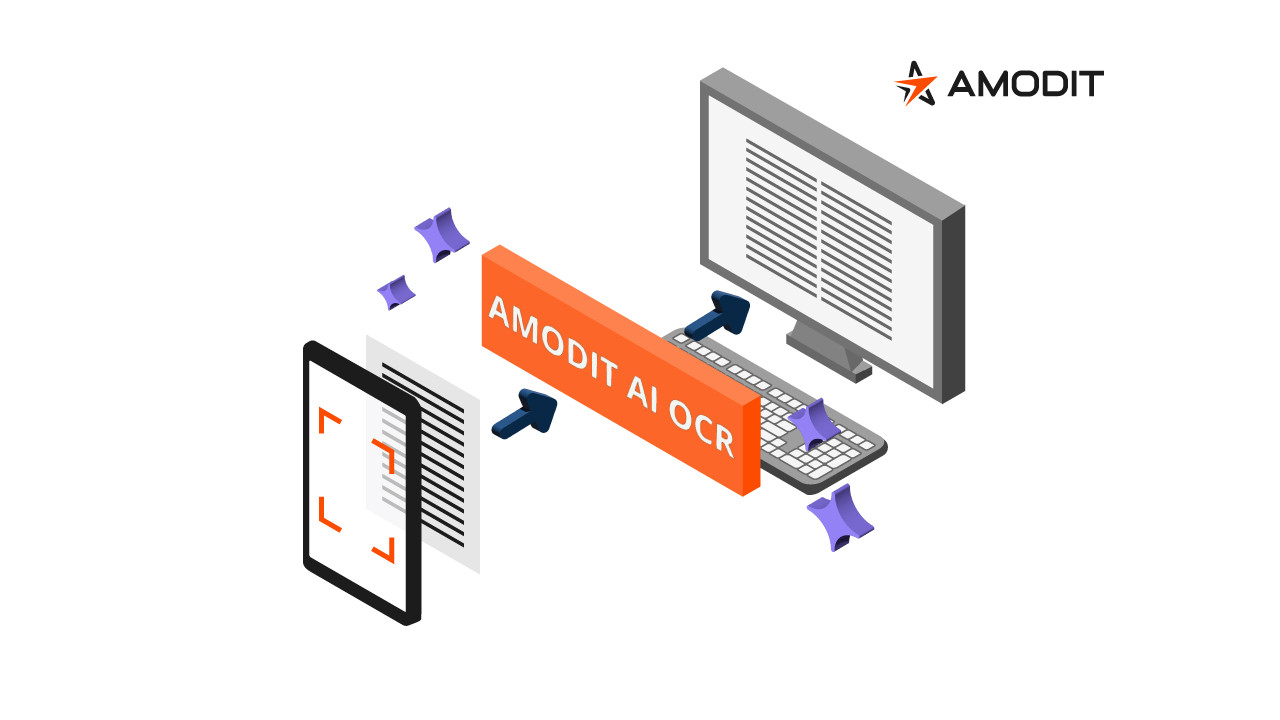
Template-based OCR can become a maintenance burden when supplier invoice layouts change. Broken templates, repeated configuration and uncertain output turn automation into another task to supervise. AMODIT AI OCR uses document context and integrates extraction with the approval workflow.
Four Practical Differences
- Context instead of rigid templates: AI-assisted recognition interprets document layout and context, reducing the need to rebuild a template after a supplier changes an invoice.
- Validation beyond transcription: AMODIT AI OCR can check Polish tax identifiers against GUS and VIES and verify calculations. A responsible person reviews the extracted data and approves the business decision.
- Ongoing product development: AI OCR is developed as part of the AMODIT platform rather than operating as a disconnected tool.
- Connection with document workflow: recognition feeds the approval process, keeping extracted data, decisions and status in one controlled flow.
The Limits of “Good Enough” OCR
Many organizations have used template-based recognition for years. It may work at first, but supplier documents evolve and templates become fragile. A layout change can stop extraction and force an employee to correct data or configure the template again.
The result is hidden maintenance work, employee frustration and uncertainty in a finance process that requires reliable data.
Three Roles in AI-Assisted Extraction
AMODIT AI OCR combines three types of work:
- Standard extraction: finds common fields regardless of their position on an invoice.
- Custom extraction: locates information such as a purchase order number or a specific invoice line.
- Validation: checks available official registers and verifies whether calculated amounts are consistent.
This gives reviewers more complete information while keeping final verification and approval with the responsible employee.
Plan the Transition
A move from template-based OCR should cover configuration, integration with the invoice workflow, user training and validation rules. The AMODIT team supports setup and launch according to the existing process.
See AI OCR in the Workflow
AI OCR FAQ
1Is moving from an existing OCR system complicated?
The scope depends on current templates, integrations and document types. The AMODIT team supports configuration and launch so that the customer's team can focus on validation and process decisions.
2How does AMODIT AI OCR differ from traditional OCR?
It uses document context instead of relying only on fixed templates, can validate selected data against GUS and VIES, checks calculations and feeds the result into the workflow. People review outputs and approve decisions.
3Is AI OCR developed as a separate product?
No. AI OCR is a strategic capability within the AMODIT platform and is developed together with its document workflows.