Process Automation Benefits Across Departments
July 3, 2025
Business Tips
Process Automation
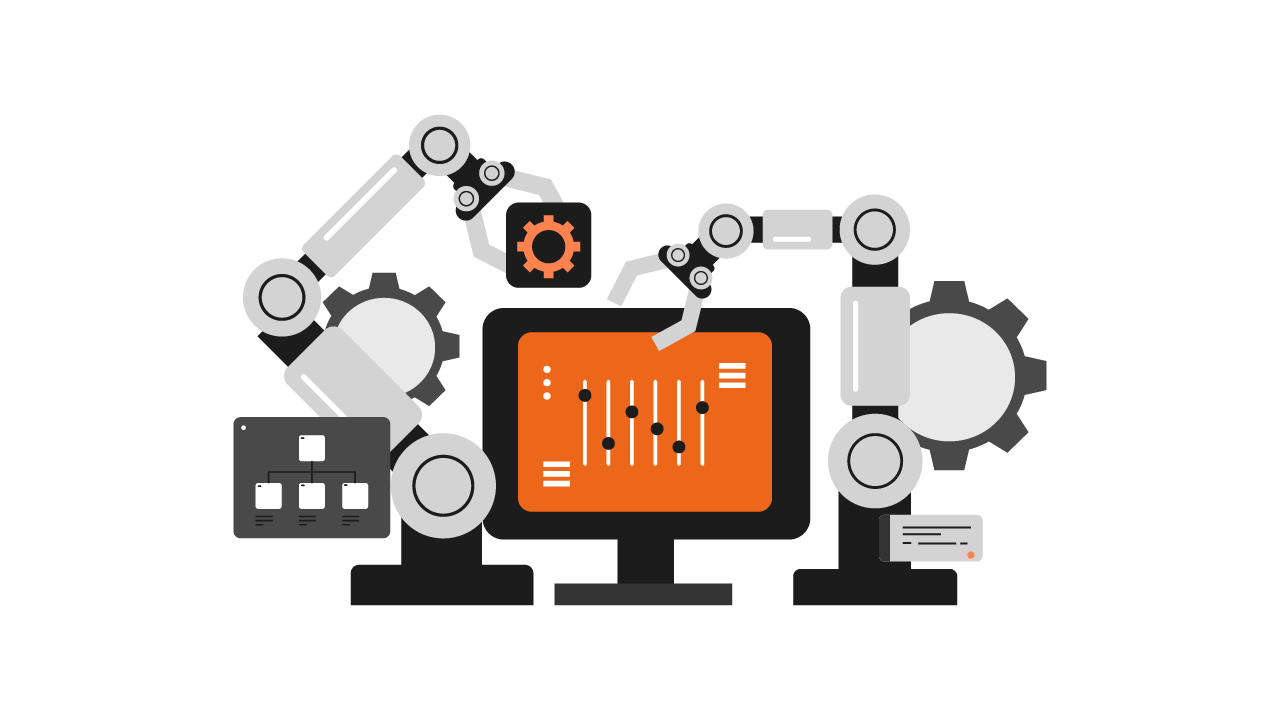
Process automation extends far beyond production lines. It organizes information, documents and decisions across Finance, HR, Administration, Logistics and Operations.
Process Automation in Practice
Automation reduces repetitive work and gives teams more time for product development, customer service and analysis. Rules execute recurring steps consistently, reducing errors caused by manual handling.
Organizations can scale operations without increasing manual effort at the same rate. Process data also becomes easier to analyze, supporting decisions about performance, resources and priorities.
Benefits Shared Across Organizations
- More predictable execution: defined processes clarify tasks and reduce delays.
- Better management visibility: recorded actions and decisions support internal control.
- Faster response to change: workflows can be adapted as operating conditions evolve.
- Consistent standards: common paths simplify cooperation across departments.
- A foundation for digitization: structured workflows prepare the organization for further digital development.
Manufacturing and Logistics
Production Planning and Service Work
Automating order planning, quality control and service requests speeds up administrative work and gives teams access to current records needed to maintain operations.
Supply Chain and Warehousing
Structured delivery controls, transport documents and inventory processes improve coordination between departments and reduce errors associated with paper information flows.
Downtime and Material Loss
Current information about resources, failures and nonconformities supports faster corrective action and more informed resource planning.
Finance, Administration and Back Office
Invoice and Document Processing
Invoice workflow records, verifies and routes documents for approval without printing or manual handoffs. It supports timely payments, budget control and fewer formal errors.
Reporting and Reconciliation
Standardized forms and approval paths reduce manual data entry when teams prepare reports, analyses and recurring settlements.
Document Visibility
Documented workflows replace searches across email inboxes and local drives. Decision-makers gain clearer status information, and teams can identify bottlenecks sooner.
HR Processes
Recruitment and Onboarding
Structured stages coordinate the people involved from candidate selection through hiring. Automated onboarding organizes information and tasks during an employee’s first days.
The Employee Lifecycle
Workflow supports employment agreements, amendments, position changes, leave requests and offboarding. HR records remain complete and easier to retrieve.
More Time for Strategic Work
Reducing manual request processing and spreadsheet updates gives HR teams more capacity for capability development and employee engagement.
A Practical Path to Automation
Flexible no-code platforms let organizations begin with selected processes without rebuilding core IT systems. Teams can create electronic forms, define approval paths, assign tasks, generate documents, monitor case status and analyze performance.
Common starting points include invoice workflow, leave requests, budget control, contract workflow and purchase requisitions. AMODIT provides configurable elements and an interface for developing these workflows over time.
Process Automation Benefits FAQ
1What does process automation mean?
It uses configured tools and rules to handle recurring work such as document routing, requests, approvals, status monitoring and performance analysis.
2What are the main benefits?
Benefits include faster execution, fewer manual errors, lower handling effort, clearer internal control, more predictable work and faster adaptation to change.
3Where does automation have the greatest impact?
Frequent applications include Finance, Administration, HR, Manufacturing and Logistics, especially where work follows repeatable rules and requires documented approvals.
4Does automation require a major technology investment?
Organizations can start with one high-value process on a configurable platform and expand gradually without replacing every core system.
5How does automation support competitive advantage?
It improves consistency, execution speed and access to process data, helping the organization respond to operating changes with better information.