

Low-Code in the AI Era
March 13, 2026
Business Tips
Low-Code
AI
Workflow
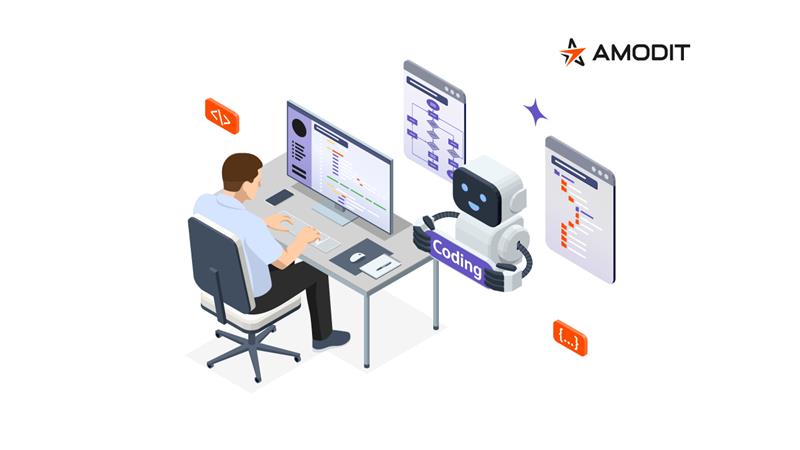
AI coding assistants and code generation have lowered the barrier to software development. A single AI-assisted developer can now create a business-process application, document workflow or simple approval tool relatively quickly.
The strategic question is what happens after the prototype: who maintains, secures and develops the system as the organization changes?
Building Is Only the Beginning
Business software must be maintained, extended and adapted to changing processes. That introduces four questions:
- What happens when the original developer leaves?
- Can another developer take over the project?
- How will the solution be updated several years later?
- Who owns data security and regulatory compliance?
The debate is therefore not limited to whether a team can build a system with AI. It concerns whether that solution will remain maintainable and scalable, especially in a midsize or large organization.
AI Lowers the Development Barrier
A few years ago, a business-process system commonly required developers, analysts and architects. Process logic, user interfaces, integrations and database management demanded significant time and resources.
By 2026, AI-assisted developers can create prototypes and workflow applications much faster. AI supports:
- code generation;
- user-interface creation;
- API integration;
- document and data analysis;
- test and documentation preparation.
This accelerates applications for document workflow, purchase approvals, HR processes and employee requests.
Automation for Small Teams
Even a small team—or one developer—can build a tool for a specific process. That can be sufficient for a simple scenario. The challenge appears as the organization grows: a quickly assembled application may not be as easy to maintain and extend as a platform designed for process management.
The Single-Developer Risk
AI can make initial development faster, but long-term ownership remains difficult. Ad hoc systems often grow around the one person who knows both the business context and the code.
When that person leaves or the team changes, the organization may face:
- incomplete architecture and process documentation;
- business logic that is difficult to understand because it is embedded in code;
- dependency on libraries and integrations selected by one developer;
- inconsistent development standards.
AI-assisted speed can amplify the risk when documentation, review and architecture governance do not keep pace. A system supporting important operations may become difficult to maintain after several years.
What Low-Code Adds
A workflow platform establishes shared process models, forms, roles, permissions, audit trails and integration patterns. The logic remains visible to more than one developer and changes can follow a controlled lifecycle.
AI and low-code are therefore complementary. AI can draft forms, rules, scripts, tests and documentation. The platform supplies a governed runtime, reusable components and an ownership model. Process owners and IT teams review, test and approve generated changes before they reach production.
Choose for the Full Lifecycle
A custom AI-assisted application can be appropriate for a bounded, stable need with clear technical ownership. A low-code platform is stronger when many workflows share users, permissions, integrations and compliance controls, or when business rules change frequently.
The decision should compare more than build speed. Evaluate maintenance, succession, documentation, security, auditability, integration standards and the cost of change over the system’s full life.
Discuss Workflow Architecture
Article by:

CEO of AMODIT
Przemysław is an expert in business process digitization and automation. He combines technology and business experience and holds a PhD in artificial intelligence. For more than 20 years, he has helped organizations improve operations through digitization, process automation and AI. Outside work, he enjoys mountain biking, travel and Latin dance.