Centralized Process Management
December 2, 2024
Business Tips
Process Management
Finance, HR, Procurement and Sales each have distinct requirements, yet their processes exchange data and depend on one another. Centralized process management keeps that work connected.
The Cost of Fragmented Process Tools
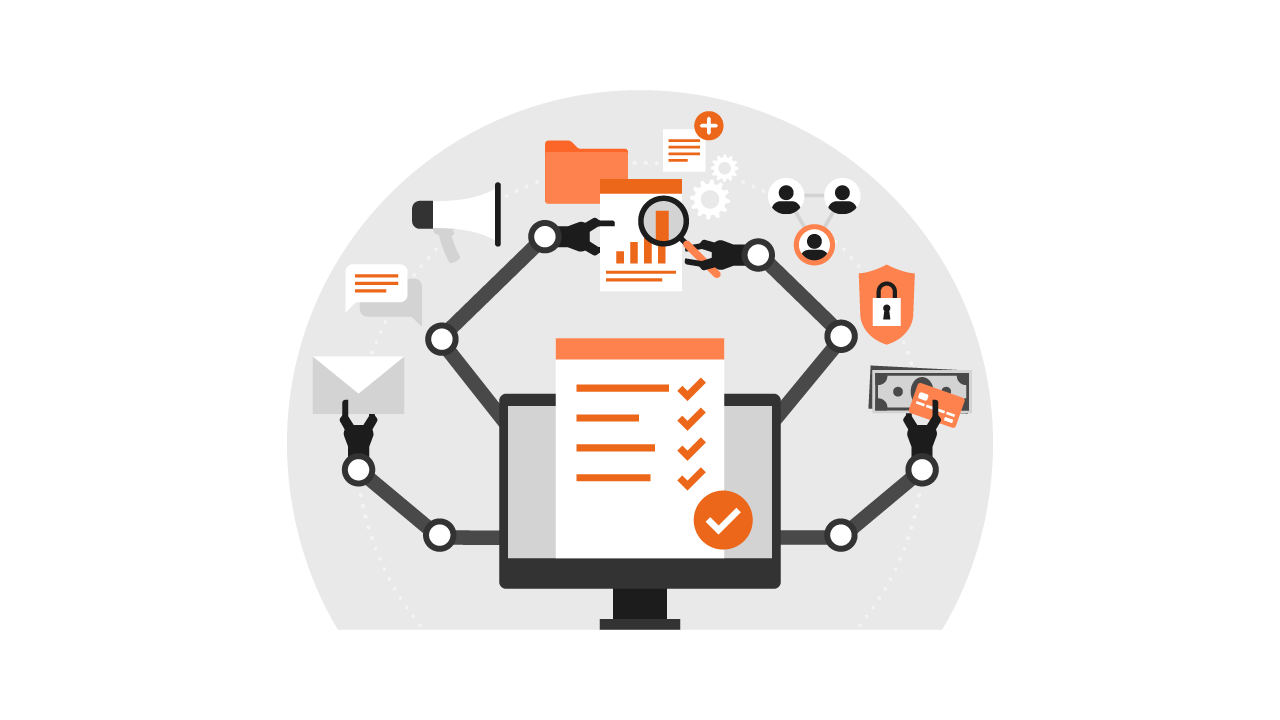
Multiple systems often create integration gaps, additional operating and maintenance costs, time lost switching between applications and limited visibility across scattered information.
A centralized platform brings several processes into one environment. It reduces information silos, standardizes how teams exchange data and makes process status easier to monitor.
Centralization with AMODIT
AMODIT supports processes from different departments in one configurable environment. Data and actions remain connected, users work without moving between separate tools, and process owners can monitor execution against internal rules and applicable requirements.
- Efficiency: one environment reduces handoffs and repeated work.
- Cost control: consolidation can reduce the number of licenses, integrations and maintenance paths.
- Faster change: teams can add or modify workflows in the same platform.
- Access control: a common environment simplifies oversight of process and data permissions.
Flexible Configuration
Organizations need workflows that reflect their own procedures and can change as operations evolve. AMODIT supports standard processes such as invoice workflow as well as organization-specific internal processes.
- Configurable workflows: teams can model different paths, forms, decisions and roles.
- Extension: additional functions can be added within the platform as needs grow.
- Deployment options: AMODIT supports MySQL and Microsoft SQL Server and can operate as SaaS or on premises.
This flexibility supports scaling, industry-specific procedures and faster responses to new business or regulatory requirements.
Long-Term Value
Centralized management combines process visibility, technology choices and a consistent development path. Organizations can add workflows across HR, Finance, Procurement and contract management without replacing the platform each time.
Integration options and configurable functions help the environment evolve with the organization. The result is a common operating layer for processes that would otherwise remain distributed across separate tools.