

BPM vs. TMS
March 20, 2026
Business Tips
BPM
TMS
Logistics
Logistics teams deal with very different problems: document intake, service requests, exception handling, route optimization and real-time operating decisions.
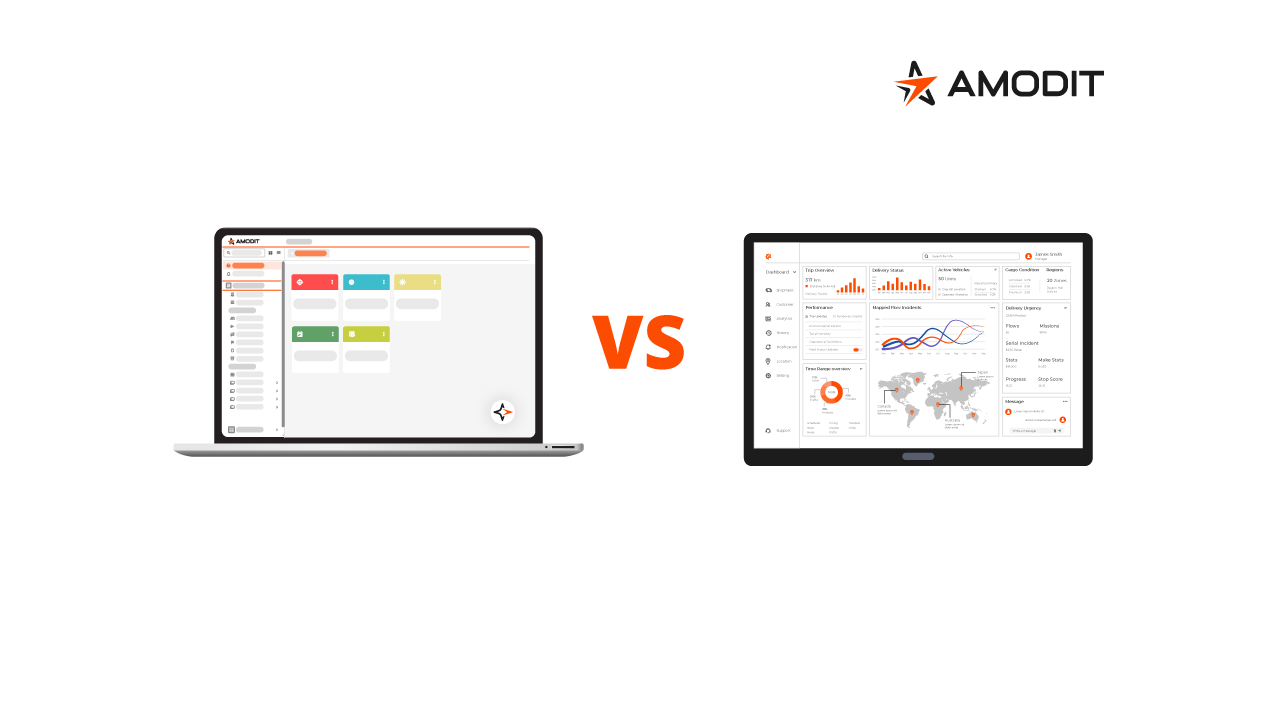
BPM and TMS address different layers. The right question is not which system is better, but whether a problem concerns process and documents or live transport operations.
Partner Documents
Logistics documents arrive as phone photos, email attachments, scans and paper. Each must be classified, linked to a counterparty or order, validated, approved and archived.
This is a document workflow problem. A BPM platform such as AMODIT can manage:
- intake;
- digitization with OCR;
- data validation;
- assignment to a counterparty or case;
- approval;
- transfer of validated data to another system.
AMODIT acts as the document intake and data-quality layer. The logistics system receives structured, reviewed information.
Transport Requests
A request for transportation or collection contains two separate problems.
Request Intake
This is a business process: a partner submits a request, the request enters a queue, data is validated, priority and SLA are checked, and a person makes the business decision.
BPM supports a partner portal, exception handling, escalation, deadlines and the decision history.
Transport Planning
Routing, route optimization, GPS, telematics, dynamic planning and physical logistics constraints belong to a Transport Management System. TMS products use optimization algorithms and operate with live logistics data.
The practical model is BPM for request intake and handling, followed by TMS for operational transport planning.
Dispatcher Assistance Belongs in TMS
The following functions form a full transport-management domain:
- own fleet versus external carrier selection;
- rate calculation and cost optimization;
- driver-hours planning;
- route selection;
- freight exchange integration;
- return-load matching;
- order-profitability analysis.
Building these functions in a BPM platform creates heavy configuration, lacks specialist optimization algorithms, strains performance and increases technical debt.
BPM still supports the surrounding process: transport orders as cases, links to contracts, margin controls, document handling, counterparty files, compliance, audit, exceptions, complaints and SLA monitoring.
A Modern Logistics Architecture
| TMS: Operating Engine | BPM: Process Layer |
|---|---|
| Routing | Document intake |
| Dispatch | Request workflow |
| GPS and tracking | Business decision controls |
| Fleet optimization | Exception management |
| Transport calculation | Compliance and documentation |
| Freight exchange integration | SLA monitoring |
BPM orchestrates the business process; TMS executes transport operations.
Advanced TMS Products
The source names SAP Transportation Management, Oracle Transportation Management, Descartes, MercuryGate, Transporeon and Alpega as examples. These products can plan transport, optimize routes, dispatch, track, calculate costs and manage carriers.
Even advanced TMS products are not full workflow platforms. Their document flow and exception handling may be less flexible than a dedicated BPM layer. Large logistics organizations therefore often combine TMS with a process platform.
Avoid the Hybrid That Excels at Neither Role
A recurring design mistake is trying to build TMS inside BPM or extend TMS until it replaces workflow. The result can be a system that handles neither process orchestration nor transport optimization well.
Use collaborating systems with clear responsibilities.
Where BPM Adds the Most Value
- digitizing partner documents;
- handling transport requests;
- managing the case as a whole;
- maintaining a counterparty file;
- controlling margin and documentation;
- compliance and SLA controls;
- complaints and exceptions.
These areas often contain manual work that TMS does not remove. BPM and TMS deliver the strongest result when each handles the layer it was designed for.
Article by:

Business Development Representative
Ewa works with large organizations to organize document flows and design consistent workflows. She analyzes processes, identifies bottlenecks and helps teams select and implement solutions for contracts, invoices, orders and operating documentation. Her work connects business, operations and technology, with an emphasis on sound questions, data and the customer’s decision context. Outside work, she explores practical AI applications, plans trips to Spain and experiments with Mediterranean cuisine.
BPM and TMS FAQ
1How does BPM differ from TMS in logistics?
BPM manages business processes, documents and decisions. TMS handles transport planning, route optimization and fleet operations. BPM operates at the workflow layer; TMS operates at the real-time logistics layer.
2Can BPM replace TMS?
No. BPM is not designed for transport optimization or live operational planning. The systems have different responsibilities and work best together.
3Where does BPM fit best in logistics?
BPM is well suited to document intake, transport requests, case management, decision controls, compliance, SLA, complaints and exception handling.