

AI Across Business Functions
December 2, 2025
Business Tips
AI
Business Processes
AI has moved from a technology experiment into daily work: document analysis, request handling, recruitment support and bid assessment. The difficult question is where it creates practical value.
The strongest use cases embed AI in a real workflow with data, context, rules and human review.
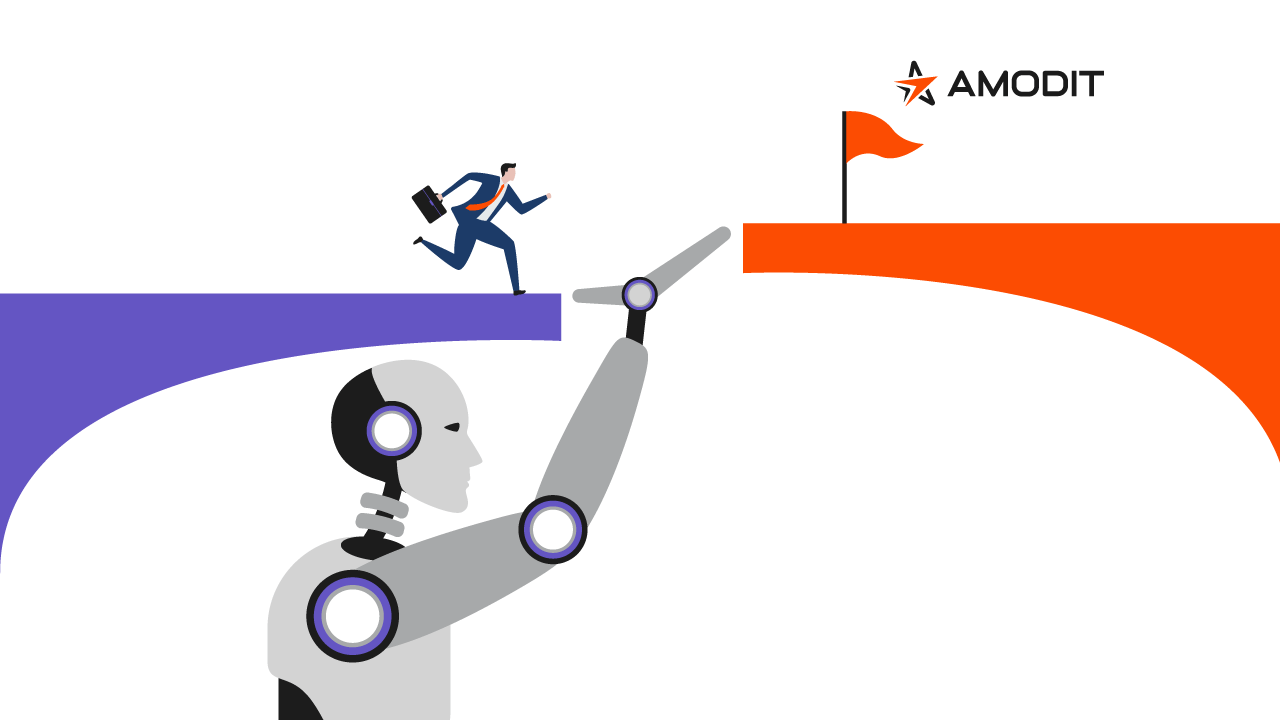
AI Belongs Inside the Workflow
Many organizations begin with prototypes that demonstrate what a model can do but never improve daily operations. AI delivers value when it participates in an actual process, has access to the right data and context, and supports the user at a repetitive or time-consuming step.
That means connecting AI with workflow rules, documents and systems such as ERP, HR and CRM. It can then prepare data, flag exceptions or recommend an action exactly where an employee needs it. The employee verifies the result and approves the decision.
Finance and Accounting
Finance combines strict accuracy requirements with documents that can be incomplete, inconsistent or differently formatted. AI can support:
- classification of invoices, corrections, receipts and warehouse documents;
- invoice-to-purchase-order matching when values do not align exactly;
- line-item extraction and invoice coding;
- duplicate and unusual-deviation detection;
- interpretation of unclear line descriptions.
Accounting teams can focus on exceptions and decisions instead of retyping every value.
HR and Recruitment
HR handles large volumes of documents, personal data and administrative work. AI can compare a candidate’s résumé with a job profile, recommend the applications that best match stated requirements, help review large candidate pools and support employee-document workflows from hiring through offboarding.
People remain responsible for selection and employment decisions. AI performs the initial structured review and presents evidence for verification.
Legal
Legal teams review growing volumes of agreements, policies and amendments. AI can compare a contract with a template or previous version, flag nonstandard or risky clauses, summarize a document and answer targeted questions such as whether a required provision is present.
The lawyer validates the analysis and approves the legal position.
Procurement
Suppliers submit offers in different formats. AI can extract data regardless of layout, normalize the offers for comparison, check completeness and formal criteria, and prepare summaries or ranked recommendations.
Procurement specialists review the evidence and make the supplier decision.
Compliance and Quality
Documentation, procedures and checklists form the basis of compliance and quality work. AI can check documents against requirements, summarize audits, identify missing elements and analyze incidents with proposed corrective actions.
Reviewers confirm findings and approve corrective measures, preserving accountability.
IT and Service Desk
IT requests consist largely of text: issue descriptions, error messages and user conversations. AI can classify tickets, recommend known resolutions, answer routine questions, extend a knowledge base from reviewed cases and suggest likely next steps.
Service Desk staff validate the recommendation before executing changes.
Sales and Bids
Sales teams in large organizations often work with lengthy requests for proposal and technical specifications. AI can extract requirements, summarize a tender, support a bid/no-bid assessment and draft parts of a response.
Sales and subject-matter experts verify requirements, make the bid decision and approve the offer.
Shared Services and Multi-Entity Organizations
Shared service centers combine high volume, repeatable processes and multiple legal entities. AI can identify a document type, assign it to the correct entity, detect duplicates and relationships, and prepare summaries or recommendations. The value grows with volume, provided the workflow includes validation and exception handling.
A Practical Starting Path
- Start with the process, not with AI.
- Locate the steps with the most repetitive work.
- Select one concrete workflow for a pilot.
- Add capabilities gradually: OCR, classification, content analysis and decision recommendations.
- Measure time, error rates and response times against an agreed baseline.
This approach ties AI to operational value instead of leaving another unused proof of concept.
AI Takes Repetition, Not Accountability
AI is most useful when it handles repetitive, monotonous and time-consuming work. Employees gain more time for decisions, analysis, customer conversations and activities that require judgment.
Organizations gain the most when they combine process automation with AI and keep verification and approval with people.
Article by:

CEO of AMODIT
Przemysław is an expert in business process digitization and automation. He combines technology and business experience and holds a PhD in artificial intelligence. For more than 20 years, he has helped organizations improve operations through digitization, process automation and AI. Outside work, he enjoys mountain biking, travel and Latin dance.